China Top 10 Off Grid Solar Can Run Air Conditioning?

Time:2026-09-20 Author:Mason
0%

Can off grid solar run air conditioning? Yes, but not automatically. The answer depends on cooling load, solar resource, battery capacity, and inverter performance. A small cabin and a large family home require very different systems. A 9,000-BTU inverter air conditioner may draw modest power after startup, while an older compressor can demand a sharp surge.

The International Energy Agency’s The Future of Cooling report estimates that air-conditioning electricity demand could triple by 2050, reaching about 6,200 TWh annually. This makes efficient, carefully designed solar cooling increasingly important. The IEA Renewables 2024 report also recorded nearly 420 GW of new solar PV capacity added globally in 2023. Solar is expanding quickly. Reliability still requires engineering.

This China Top 10 review examines whether selected off-grid solar solutions can support air conditioning in practical conditions. It considers panel wattage, battery storage, inverter surge ratings, daily cooling hours, and cloudy-weather reserves. NREL’s PVWatts guidance shows why location and system losses matter; rated panel output is not household energy production. The U.S. Department of Energy also emphasizes proper sizing and high-efficiency equipment.

Real use is less tidy. A system may run a split air conditioner at noon, then struggle after sunset. A hot, humid day can expose weak battery planning. One calculation may look convincing, yet fail during several cloudy days. Therefore, this guide compares technical specifications with realistic operating limits, not optimistic marketing claims. It also asks a harder question: can the system cool a room comfortably without draining its batteries before morning?
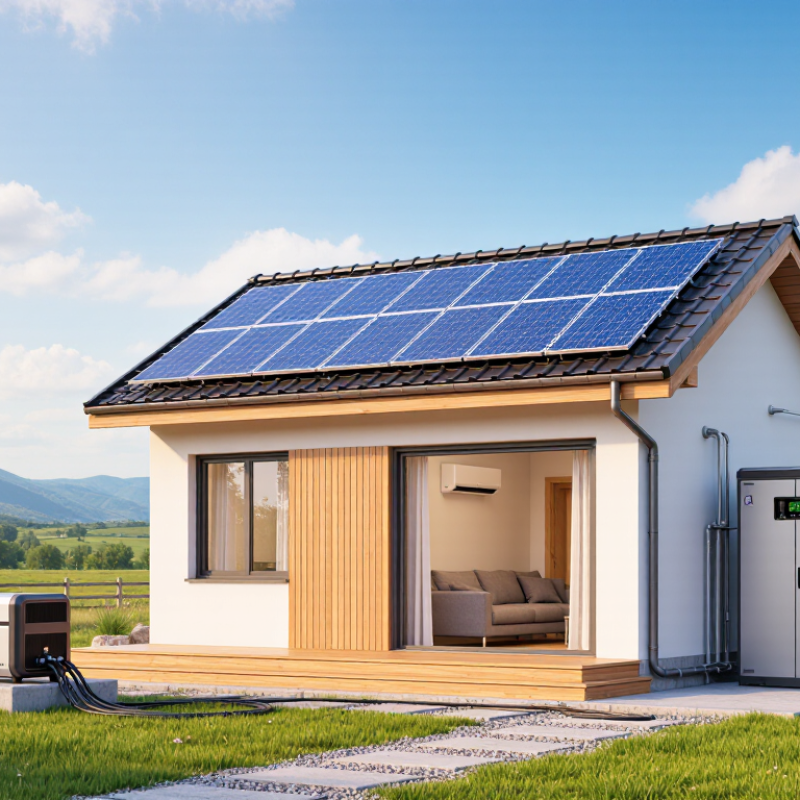
China Top 10 Off Grid Solar Can Run Air Conditioning?

What Is an Off-Grid Solar System for Air Conditioning?

An off-grid solar system for air conditioning produces and stores electricity without relying on the public grid. Solar panels generate power during daylight, while batteries support the air conditioner after sunset or during cloudy periods. An inverter converts battery electricity into the alternating current required by most household cooling units.

Sizing must begin with the air conditioner, not the panels. A 1,200-watt unit running for six hours may consume about 7.2 kilowatt-hours, before inverter losses. Hot weather, poor insulation, and frequent door opening can raise that demand. In practical installations, I would check the cooling load, local sunlight, battery temperature, and starting current. An efficient inverter-driven air conditioner usually reduces sudden power spikes.

The battery bank needs enough usable capacity for overnight operation, with reserve power for several cloudy hours. Lithium batteries can provide stable daily cycling, but their protective controls and installation temperature still matter. Panels also need clear roof space and a safe mounting structure. A system that looks adequate on paper may fail at 3 a.m. if the battery is undersized. I have found that users often estimate cooling time too optimistically. Real rooms leak heat, especially through uninsulated roofs and open windows. Careful monitoring after installation can reveal whether the design needs better insulation, more storage, or changed cooling habits.

China Top 10 Off Grid Solar Can Run Air Conditioning? - What Is an Off-Grid Solar System for Air Conditioning?

System
Option
Air Conditioner
Size
Typical AC Input
Power
Recommended Solar
Array
Battery Bank
Capacity
Usable Battery
Energy*
Estimated Battery-Only
Runtime
Approx. Daily Solar
Energy for AC**
1 0.75 ton 0.6–0.9 kW 2.0 kWp 5 kWh 4 kWh 4.4–6.7 hours 6.4 kWh
2 1 ton 0.8–1.2 kW 2.5 kWp 7.5 kWh 6 kWh 5.0–7.5 hours 8.0 kWh
3 1.5 ton 1.2–1.8 kW 3.5 kWp 10 kWh 8 kWh 4.4–6.7 hours 11.2 kWh
4 2 tons 1.5–2.3 kW 5.0 kWp 15 kWh 12 kWh 5.2–8.0 hours 16.0 kWh
5 2.5 tons 1.9–2.8 kW 6.0 kWp 20 kWh 16 kWh 5.7–8.4 hours 19.2 kWh
6 3 tons 2.3–3.5 kW 7.5 kWp 25 kWh 20 kWh 5.7–8.7 hours 24.0 kWh
7 4 tons 3.0–4.5 kW 10.0 kWp 35 kWh 28 kWh 6.2–9.3 hours 32.0 kWh
8 5 tons 3.8–5.7 kW 12.5 kWp 45 kWh 36 kWh 6.3–9.5 hours 40.0 kWh
9 6 tons 4.5–6.8 kW 15.0 kWp 55 kWh 44 kWh 6.5–9.8 hours 48.0 kWh
10 8 tons 6.0–9.0 kW 20.0 kWp 75 kWh 60 kWh 6.7–10.0 hours 64.0 kWh
Planning assumptions: Values are engineering estimates for high-efficiency inverter air conditioners. Battery usable energy assumes an 80% maximum depth of discharge. Daily solar output assumes approximately 4 peak sun hours and an 80% overall system efficiency. Actual performance depends on climate, insulation, indoor temperature, shading, solar orientation, seasonal sunlight, air-conditioner efficiency, and other household loads. An inverter air conditioner with soft-start capability is recommended for off-grid operation.

How Much Solar Power Does an Air Conditioner Need?

How much solar power does an air conditioner need? The answer starts with cooling load, not panel count. A 12,000 Btu/h unit rated at EER 10 draws about 1.2 kW while operating. Eight running hours require 9.6 kWh before inverter and battery losses. Actual use changes with outdoor temperature, insulation, thermostat settings, and cycling. The U.S. Department of Energy advises proper cooling-load sizing, since oversized systems may cycle poorly and remove less humidity. This matters in hot, humid areas of China.

For an off-grid estimate, NREL’s PVWatts documentation applies system-loss assumptions near 14 percent. With 4.5 peak-sun-hours, one kilowatt of panels may produce roughly 3.9 kWh daily after those losses. Supplying 9.6 kWh would need about 2.5 kW of solar capacity in favorable weather. Add cloudy days, battery charging losses, and household appliances. A 3.5–4 kW array is more realistic.

Battery planning is equally important. A 10 kWh nighttime cooling load may require about 15 kWh of nominal battery capacity at 80 percent usable depth. Compressor startup can briefly demand much more power than its running rating. The inverter must support that surge. My estimate is imperfect. A clamp meter measuring real current is better than relying only on labels. NREL data and DOE guidance provide a useful baseline, not a guarantee for every home.

Key Components of an Off-Grid AC Solar System

An off-grid solar system can run air conditioning, but design starts with the cooling load, not panel count.

A small room may need 1.5 to 3 kilowatts of cooling capacity. Insulation, sunlight, and humidity change actual consumption. In China, coastal humidity and northern winter temperatures create different planning conditions. Measure daytime and nighttime use where possible. Air conditioners draw more power during startup, although inverter-driven models usually reduce that surge. Sites behave differently. A rough estimate is not enough.

The solar array is the energy source.

Select panels to cover daily cooling demand, battery charging, and conversion losses. Hot roofs produce less power than rated laboratory output. Allow practical headroom during cloudy periods. An MPPT charge controller should match the array voltage and battery chemistry. Its ratings need safe margins, not exact matches. Clouds arrive. That matters.

The battery bank supplies evening cooling and short periods of weak sunlight.

Capacity depends on usable depth of discharge, temperature, and required backup hours. A pure sine wave inverter should handle continuous AC load, compressor surge, and other appliances.

Add DC fuses, isolators, surge protection, grounding, and correctly sized cables. A monitoring meter can reveal low voltage, overheating, or unexpected night consumption.

During field installations, technicians should verify ventilation, enclosure clearances, and local electrical requirements. I would test the system under real heat, because calculations can miss a poorly insulated room.

Top 10 Off-Grid Solar Configurations for Running Air Conditioning

Running air conditioning off-grid in China requires matching cooling demand, sunlight, and battery depth. These ten configurations are practical starting points, not fixed guarantees. A 3 kW solar array, 5 kWh battery, and 3 kW inverter suit a small 9,000 Btu unit. A 4.5 kW array, 10 kWh battery, and 5 kW inverter support a 12,000 Btu inverter unit. A 6 kW array, 15 kWh battery, and 6 kW inverter fit an 18,000 Btu system. An 8 kW array, 20 kWh battery, and 8 kW inverter suit a 24,000 Btu unit.

A 5 kW array, 5 kWh battery, and 5 kW inverter prioritize daytime cooling. An 8 kW array, 20 kWh battery, and 8 kW inverter provide stronger evening coverage. A 10 kW array, 25 kWh battery, and 10 kW inverter can operate two smaller air conditioners. A 12 kW array, 30 kWh battery, and 12 kW inverter suit a larger, well-insulated home. An expandable 6 kW array, 10 kWh battery, and 6 kW inverter allow staged growth. A 7 kW array, 20 kWh battery, and 7 kW inverter favor cloudy coastal regions.

A field check should include compressor starting current, cable length, roof shading, and local summer temperatures. Inverter-based air conditioners usually reduce surge stress. Insulation matters more than many owners expect. These figures can fail during several rainy days. I would add battery capacity cautiously, because oversized storage increases cost and maintenance. Solar production also changes sharply between northern winters and southern humid summers. Proper protection, ventilation, and professional commissioning remain essential.

China Top 10 Off-Grid Solar Configurations for Running Air Conditioning

The chart compares estimated daily air-conditioning runtime for ten off-grid solar system configurations. Larger photovoltaic arrays and battery banks generally support longer operation and higher average cooling loads.

Estimates assume approximately 5 peak-sun hours per day, 80% usable battery capacity, 80% overall system efficiency, an inverter air conditioner, and average rather than maximum compressor power. Actual runtime varies with climate, insulation, thermostat settings, shading, battery age, and seasonal solar production.

How to Choose the Right System for Your Cooling Needs

How to Choose the Right Off-Grid Solar System for Air Conditioning

An off-grid solar system can run an air conditioner, but cooling demand matters more than panel count. A small bedroom unit may use 700–1,200 watts while operating. Starting power can be much higher. Hot, humid afternoons also increase runtime. Check room size, insulation, window exposure, and local summer temperatures before selecting equipment. In practice, a 1.5 kW inverter may support a modest unit, but it could fail when other appliances start together. My first estimate ignored this detail.

A dependable system must match the air conditioner, inverter, solar array, and battery. The inverter needs enough continuous and surge capacity. The battery should cover evening cooling without reaching its full rated capacity. For example, four hours of cooling at 1,000 watts requires about 4 kWh before system losses. Allow extra capacity for cloudy weather and battery aging. A qualified installer should verify the load calculation and cable sizes. Guessing can become expensive.

Tips: Choose an efficient air conditioner with adjustable speed control. Run cooling during strong sunlight when possible. Keep filters clean. Use curtains and seal gaps around windows. Test the system during a hot afternoon, not only on a mild day. Leave room for future loads, because your energy needs may change.

FAQS

Can an off-grid solar system run an air conditioner?

Yes, if cooling demand, solar production, battery capacity, and inverter output match. It is not guaranteed every day. Several rainy days can expose weak planning.

What system suits a small 9,000 Btu air conditioner?

A 3 kW solar array, 5 kWh battery, and 3 kW inverter are practical starting points. Insulation, sunlight, and daily runtime still matter.

How much energy does four hours of cooling require?

A unit using 1,000 watts needs about 4 kWh for four hours. Allow extra capacity for losses, cloudy weather, and battery aging.

Why must the inverter handle starting power?

Compressors may draw more power when starting. A small inverter could fail when cooling and another appliance start together. Surge capacity matters.

Which setup favors daytime cooling?

A 5 kW array, 5 kWh battery, and 5 kW inverter prioritize daytime operation. Run cooling during strong sunlight when possible.

What setup provides better evening coverage?

An 8 kW array, 20 kWh battery, and 8 kW inverter provide stronger evening support. The battery should not regularly reach its full rated capacity.

What should a larger, insulated home consider?

A 12 kW array, 30 kWh battery, and 12 kW inverter may suit a larger, well-insulated home. Poor insulation can undermine this design quickly.

What should be checked before installation?

Check compressor starting current, cable length, roof shading, ventilation, and local summer temperatures. Test the system on a hot afternoon, not a mild morning.

How can cooling performance improve without adding equipment?

Clean filters, close curtains, seal window gaps, and cool rooms during strong sunlight. I initially underestimated insulation. That was a planning mistake.

Can these configurations work during extended cloudy weather?

They may struggle after several rainy days. Add battery capacity cautiously, because oversized storage increases cost, weight, and maintenance. Estimates can fail.

Conclusion

An off-grid solar system can power air conditioning by combining solar panels, an inverter, batteries, protection equipment, and appropriate wiring into a standalone energy solution. The key question is: can off grid solar run air conditioning? Yes, but the system must be carefully sized according to the air conditioner’s cooling capacity, operating hours, starting surge, local sunlight, and desired battery backup. Efficient inverter-driven air conditioners generally require less energy and are easier to operate with solar power.

This guide explains how to estimate an air conditioner’s solar demand and reviews ten practical off-grid configurations, ranging from smaller systems for occasional cooling to larger setups designed for extended daily operation. It also discusses panel capacity, battery storage, inverter performance, and energy management. By comparing these factors with your cooling needs, climate, budget, and available installation space, you can select a reliable system that provides comfortable cooling while reducing dependence on traditional power sources.

Mason

Mason

Mason is a seasoned marketing professional with a deep expertise in the company's offerings and a passion for driving brand awareness. With a strong background in digital marketing strategies, he has an innate ability to connect with diverse audiences and effectively communicate product benefits.......