China’s solar microgrid market is moving from pilot projects toward practical business infrastructure. Factories, hotels, farms, and remote communities are testing systems that combine solar panels, batteries, smart controls, and limited grid support. Yet one difficult question remains: can a business survive on solar microgrid?
Peter Asmus, a recognized microgrid analyst and author, has said, “Microgrids are the future of energy.” His view reflects a clear market shift. Businesses want lower electricity costs, stronger resilience, and fewer interruptions during grid failures. A warehouse in Guangdong, for example, may use rooftop solar during the day, store surplus power in batteries, and operate essential equipment after sunset. That sounds simple. It is not.
System design determines survival. A business must measure seasonal sunlight, battery replacement costs, maintenance skills, financing terms, and local electricity prices. Poor forecasting can turn a promising project into an expensive asset. Cloudy weeks expose weak planning. Batteries also lose capacity over time. These details matter more than impressive panel counts.
This article examines whether China’s leading solar microgrids can support real commercial operations. It considers energy savings, backup reliability, payback periods, safety management, and operational experience. The evidence will not support every optimistic claim. Some projects may succeed financially, while others may depend on subsidies or unusually favorable conditions. That uncertainty deserves attention.
A solar microgrid is not automatically a profitable business solution. It is a long-term operating decision. Its value depends on disciplined engineering, transparent data, and realistic expectations.
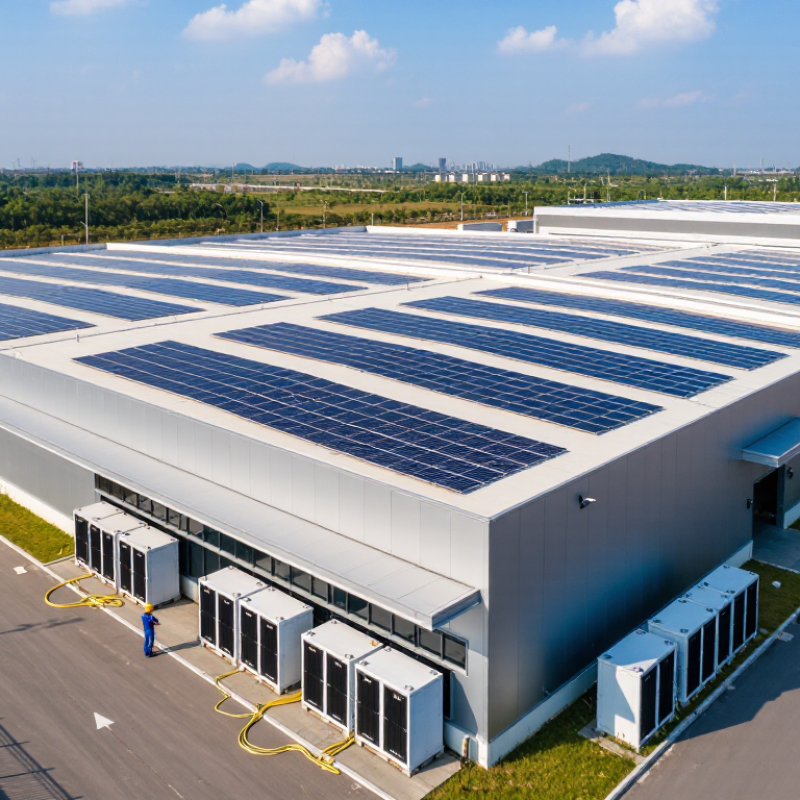
Solar microgrids are local power systems that generate, store, and distribute electricity. They can operate with or without the main grid. Most projects combine solar panels, batteries, smart controls, and backup equipment. In China, expansion is growing across industrial parks, remote villages, ports, and public facilities. A factory may use rooftop panels during daylight and stored electricity after sunset. A village clinic may keep refrigeration and lighting available during outages. The idea sounds simple. The economics are not.
For a business, survival depends on reliable design and realistic financial planning. Electricity savings may support cash flow, but installation, battery replacement, maintenance, and financing can reduce returns. Operators should study local sunlight, roof strength, energy demand, and grid rules before construction. A cold-storage site needs stable power, not only cheap power. Performance data should be checked monthly. Weather can reduce output, and batteries slowly lose capacity. Some projects may look successful in early reports but weaken after several years. That deserves honest review.
Tips: Start with a small pilot system. Measure electricity use for every season. Keep emergency power separate from daily savings. Choose trained technicians and clear maintenance contracts. Ask who owns the batteries after their warranty ends. Leave room for repairs, upgrades, and disappointing results.
China’s leading solar microgrid systems operate as coordinated energy networks, not oversized rooftop panels. A typical site combines photovoltaic arrays, battery storage, inverters, smart meters, and backup generation. The controller forecasts sunlight, compares demand, and assigns power to essential loads. Cold storage, pumps, and production lines usually receive priority. Office lighting waits when batteries fall low. This order protects cash flow during grid interruptions.
During daylight, solar power serves live demand first. Extra electricity charges the battery, while the controller limits unsafe overcharging. After sunset, stored energy supports selected equipment through scheduled discharge windows. Operators monitor voltage, temperature, battery health, and grid dependence from a central dashboard. Yet automation does not remove human judgment. A technician still checks cable heat, dust on modules, water ingress, and unusual noise. Small faults can become expensive outages.
Business survival depends on operating discipline as much as installed capacity. Managers compare energy yields with production schedules, maintenance costs, and seasonal weather. They may shift milling, pumping, or charging tasks into sunny hours. This reduces peak purchases without disrupting delivery commitments. In practice, forecasts are imperfect. Clouds arrive early, batteries age, and demand changes suddenly. A resilient system keeps reserve capacity and clear manual procedures. Local training, spare components, and honest performance records often matter more than impressive capacity figures.
| Operating Dimension | Typical China Solar Microgrid Practice | Business Relevance | Reference Basis |
|---|---|---|---|
| Primary generation source | Solar photovoltaic generation is combined with battery storage and, where required, a grid connection or standby generator. | Diversified power sources reduce exposure to grid interruptions and daytime electricity purchases. | International Electrotechnical Commission microgrid terminology; China distributed-energy project practice. |
| Common application sites | Industrial parks, commercial buildings, remote communities, islands, agricultural facilities, telecom sites, and public-service facilities. | Sites with predictable daytime demand or weak-grid access generally provide stronger operating value. | National energy-transition planning and documented distributed-energy deployment categories. |
| Solar capacity scale | Small systems may be below 100 kW; commercial and industrial systems commonly range from several hundred kilowatts to multiple megawatts. | Capacity is normally sized against roof area, land availability, load profile, and export limitations. | Distributed photovoltaic project classifications used in China and international commercial practice. |
| Battery storage duration | A practical design range is approximately 2–6 hours of rated discharge, depending on the required backup function and load profile. | Longer duration improves resilience but increases capital cost, thermal-management needs, and replacement exposure. | Common commercial battery-energy-storage sizing practice. |
| Battery technology | Lithium iron phosphate is widely used in stationary storage because of its thermal stability, cycle performance, and absence of nickel and cobalt. | Technology selection affects safety controls, usable capacity, maintenance, and lifecycle economics. | Stationary energy-storage safety and battery-technology literature. |
| System operating modes | Grid-connected operation is used for normal economic dispatch; islanded operation is activated during outages or planned maintenance. | Automatic transition allows essential operations to continue while limiting unnecessary battery discharge. | IEEE 2030.7 and IEC microgrid control principles. |
| Load prioritization | Critical loads such as safety systems, communications, control equipment, refrigeration, and selected production lines are separated from non-critical loads. | Load shedding preserves battery energy and protects revenue-generating or safety-critical activities. | Standard microgrid energy-management and protection practice. |
| Solar resource conditions | China has strong regional variation: annual solar resources are generally higher in the northwest and north, while eastern and southern regions have more cloud and rainfall. | Regional solar-resource assessment is essential before estimating annual generation or payback. | China solar-resource zoning and national meteorological assessment practice. |
| Energy-management controls | Controllers forecast solar output and demand, then coordinate photovoltaic generation, battery charging, grid import, export, and load shedding. | Forecast-based dispatch reduces curtailment and improves the value of stored electricity. | SCADA, energy-management-system, and distributed-energy-control standards. |
| Revenue and savings sources | Savings may come from self-consumption, peak-demand reduction, time-of-use shifting, reduced outage losses, and in some locations electricity export. | Project viability depends more on the load profile and tariff structure than on solar capacity alone. | China time-of-use electricity-pricing and distributed-generation policy frameworks. |
| Grid-support functions | Advanced systems can provide voltage support, reactive-power control, ramp-rate management, and limited frequency-response services when permitted by grid rules. | Ancillary-service participation can create additional value but requires compliant controls and market access. | Grid-code requirements and distributed-energy-resource control standards. |
| Reliability design | Reliability is improved through electrical protection, redundant communications, black-start capability where required, fire detection, thermal monitoring, and periodic testing. | Safety and availability depend on the complete system design, not only on the photovoltaic modules or batteries. | IEC, IEEE, and national stationary-storage safety guidance. |
| Key operating risks | Weather variability, battery degradation, protection miscoordination, interconnection limits, tariff changes, curtailment, and insufficient maintenance are common risks. | A bankable project requires sensitivity analysis for energy yield, battery replacement, tariffs, and outage frequency. | Renewable-energy project-finance and microgrid risk-assessment practice. |
| Business-survival indicator | The strongest projects combine high on-site electricity use, measurable outage costs, suitable tariffs, disciplined battery dispatch, and long-term operations and maintenance. | A solar microgrid can support business continuity, but profitability is site-specific and should be evaluated using lifecycle cash flow rather than headline capacity. | Lifecycle-cost analysis and commercial microgrid feasibility methodology. |
In China, a solar microgrid business rarely fails because panels produce too little electricity. The harder question is who pays, how often, and for what service. Costs begin with land preparation, panels, inverters, batteries, control equipment, installation, and grid connection. In remote villages, transport and maintenance can raise the budget sharply. A battery may also need replacement before the panels stop working.
Revenue depends on local demand. A factory can create predictable daytime consumption, while farms may need power only during irrigation seasons. Community systems can earn through electricity sales, backup services, equipment leasing, or long-term energy contracts. Reliable meters matter. Without accurate billing, small losses become permanent losses. Policy support may improve returns, but a business should not depend entirely on subsidies.
Cash flow is the real test. A project may look profitable on paper while waiting months for customer payments. Financing costs, battery degradation, insurance, and technician visits are easy to underestimate. I would not call every high-yield forecast reliable. Demand surveys should include actual load measurements, not optimistic interviews. One practical lesson is simple: design for repair, not perfection. Spare fuses, clear monitoring data, and trained local workers can protect revenue better than expensive features. Still, some assumptions remain uncertain, especially future electricity prices and battery costs. That uncertainty deserves a visible place in every investment model.
Solar Microgrids: Which Markets and Customers Support Long-Term Viability
Solar microgrids survive where grid access is weak and electricity demand is predictable. Rural clinics, schools, telecom towers, and food-processing workshops are stronger customers than scattered households. They use power daily, not only after sunset. The World Bank’s ESMAP estimates that mini grids could serve 490 million people by 2030. This signals a large market, but not guaranteed revenue.
Commercial farms and cold-storage operators often provide better payment security. A refrigeration unit can turn reliable electricity into measurable income by reducing spoiled crops. Small factories also value stable voltage for pumps, welders, and milling equipment. In many emerging markets, these customers can sign longer contracts than households. Cash flow matters more than impressive installation numbers. Very practical.
Public facilities can anchor demand, especially when local authorities support transparent tariffs and timely payments. However, operators still face seasonal demand, currency risk, battery replacement costs, and difficult site maintenance. The International Renewable Energy Agency reported global renewable capacity above 4,000 gigawatts in 2024, yet generation assets do not automatically create viable businesses. Equipment may be affordable, but service networks are often thin. A technically excellent project can still fail. This is where many forecasts feel too optimistic. Long-term viability depends on mixed customers, realistic tariffs, local technicians, and payment systems that fit daily cash patterns.
China added 216.88 GW of solar PV capacity in 2023. Distributed projects represented 96.29 GW, indicating a substantial market base among commercial, industrial, agricultural, residential, and public-sector electricity users that can support localized solar-plus-storage systems.
Distributed PV is a stronger proxy for microgrid customer potential than utility-scale capacity because it is installed close to electricity loads. Long-term viability is most likely where customers have reliable daytime demand, high grid electricity costs, critical-load requirements, or sufficient space for solar and storage. Data source: National Energy Administration of China, 2023 national power industry statistics.
China’s solar microgrid market looks promising, but survival depends on risks beyond panel prices. The IEA reported nearly 510 gigawatts of renewable capacity additions worldwide in 2023. Solar represented about three-quarters of that growth. China drove a major share of this expansion. However, strong installation figures do not guarantee stable project income. A microgrid can still lose money when electricity demand is seasonal, local tariffs change, or battery replacement arrives earlier than planned.
Cash flow is the first serious test. A project may require large upfront spending for batteries, controls, transformers, and maintenance. The IRENA Renewable Power Generation Costs report found that utility-scale solar costs fell by about 90% between 2010 and 2023. Yet this decline does not remove financing costs or site-specific expenses. In remote factories, weak distribution networks can also create curtailment. Energy is produced, but not fully used. That is painful.
Technical reliability matters just as much. NREL research shows that battery aging depends on temperature, cycling frequency, and operating conditions. A hot equipment room can quietly shorten the business model. Cybersecurity and weather damage add further exposure. My practical concern is simple: many feasibility studies assume perfect sunlight and constant demand. Real sites behave differently. A conservative operator should test cloudy weeks, sudden load drops, delayed payments, and component replacement costs before signing long-term contracts. Forecasts can be wrong. The contract must survive that mistake.
It is a local electricity system. Solar panels generate power, batteries store it, and controls manage distribution. It can work with or without the main grid.
Projects are appearing in factories, industrial parks, ports, villages, and public facilities. A clinic may use stored power for lights and refrigeration during outages.
Costs include panels, batteries, inverters, controls, installation, land preparation, and grid connection. Remote sites may face higher transport and maintenance expenses. Battery replacement can arrive early.
Revenue may come from electricity sales, backup services, equipment leasing, or long-term energy contracts. Factories often provide steadier demand than seasonal farms. Accurate meters are essential.
Customer payments may arrive late. Financing, insurance, maintenance, and technician visits can reduce cash flow. Future electricity prices remain uncertain. Forecasts can be wrong.
Cloudy weather lowers solar output. Batteries lose capacity through age, heat, and frequent cycling. A hot equipment room can quietly shorten battery life. That hurts.
They should measure electricity use across every season. They should inspect sunlight, roof strength, equipment space, and local grid conditions. Interviews alone may be too optimistic.
Start with a small pilot system. Test cloudy weeks, sudden demand drops, delayed payments, and replacement costs. Keep emergency power separate from daily savings. Leave room for repairs.
Check performance data every month. Keep spare fuses and clear maintenance records. Use trained local technicians and define repair responsibilities. Perfect planning is unrealistic.
Ask who owns the batteries after warranty expiration. Ask how repairs are funded and who handles outages. Review conservative financial assumptions. I would still question high-yield forecasts.
Solar microgrids are becoming an important part of China’s energy transition by combining solar generation, battery storage, smart controls, and local distribution networks. They can supply reliable electricity to industrial parks, rural communities, commercial facilities, and remote sites while reducing dependence on centralized power systems. Leading systems typically balance real-time demand, store surplus solar power, and coordinate backup resources to maintain stable service.
Whether can a business survive on solar microgrid depends on more than equipment sales. Costs include development, land, hardware, installation, financing, maintenance, battery replacement, and grid connection. Revenue may come from electricity sales, energy management services, reliability solutions, and long-term contracts. Viability is strongest where customers face high electricity prices, unstable supply, strict environmental goals, or strong demand for resilient power. However, businesses must manage policy changes, equipment degradation, financing pressure, seasonal generation, customer concentration, and competition. Sustainable operators need accurate project planning, dependable technology, diversified customers, and disciplined financial management to remain profitable over time.

Jonas Energy